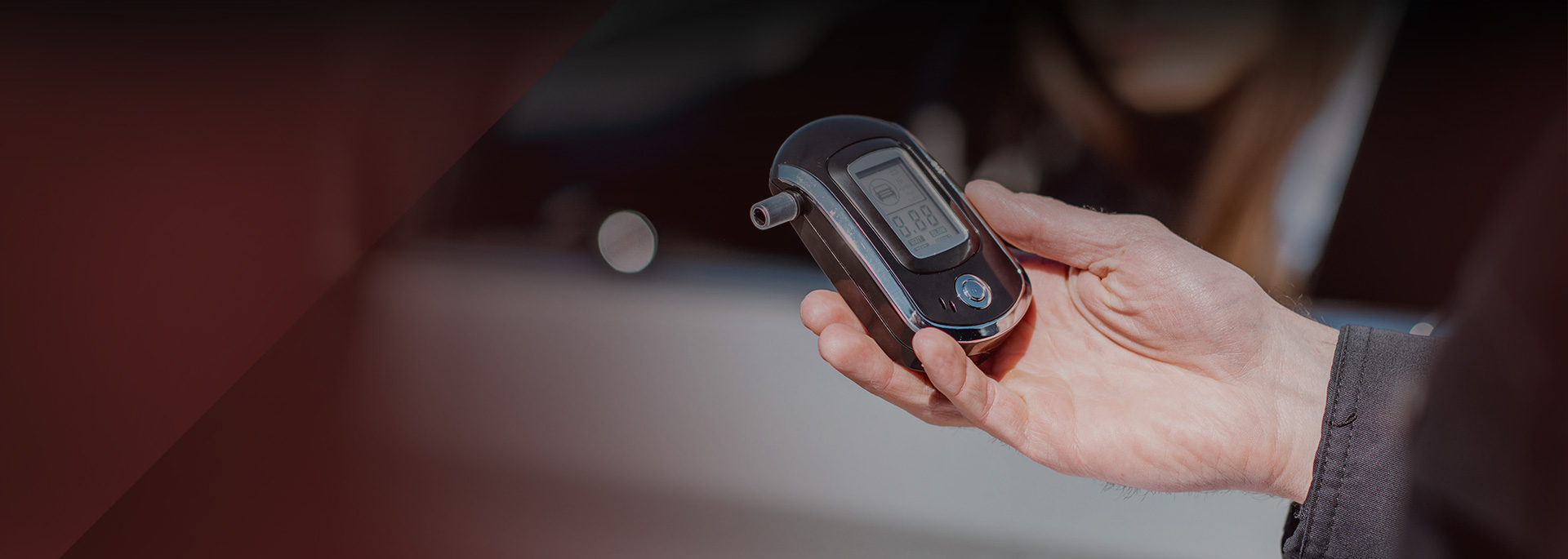
Breath & Blood Alcohol Testing
The implied consent laws of California provide that if you are arrested for drunk driving, you are presumed to have implicitly consented to chemical testing as a condition of the privilege to drive. Your driving privilege can be suspended if you refuse to submit to testing. The chemical test will typically consist of your choice of breath or blood analysis; a urine sample can be taken instead if neither breath nor blood is readily available.
For further information about breath and blood alcohol testing and our law firm, see Lawrence Taylor’s videos on this site. Call us at (562) 330-4173 to schedule a free initial consultation.

.2408161328502.png "Super Lawyers | 5 Years")
.2309081227201.png "Lexis Nexis")



.2503051209514.png "Super Lawyers")




DUI Prosecution Before Scientific Testing
In the past, the prosecutor’s case rested solely on the arresting officer's testimony. The evidence against the defendant consisted entirely of the officer’s observations of the defendant and of their opinion as to sobriety. But the pitfalls were many. The police officer’s word could be challenged, and there was nothing to corroborate their observations. The validity of their opinion could be questioned, and their opinion often had little special education or training behind it. Perhaps most importantly, the prosecutor had to fit the DUI defendant within a vague, ill-defined category entitled “under the influence.” At no time could the prosecutor offer any evidence but outward symptoms and opinions, and they could even spell out the DUI offense beyond such amorphous phrases as “substantial impairment.”
Two factors led to a drastic change in this situation. The first was the advent of advanced scientific techniques within criminalistics laboratories. Law enforcement increasingly turned to scientific detection methods to prove criminal conduct. Then, in 1938, the American Medical Association set up a “Committee to Study Problems of Motor Vehicle Accidents”; at almost the same time, the National Safety Council established a “Committee on Tests for Intoxication.” Studies by these committees resulted in a recommendation that legal standards be set for determining a driver's intoxication by chemical testing. Although there was some disagreement among the prominent medical members of the committees, the consensus recognized that any individual who had .15 percent alcohol in their blood could be presumed to be under the influence of alcohol; anyone having less than .05 percent of alcohol could be presumed to be not under the influence; and those individuals falling in the .05 – .15 percent midrange might or might not be under the influence – that is, the test would not be conclusive. The .15 level was lowered in 1960 by the recommendations of both committees to .10 percent (this vacillation of medical experts, incidentally, should give added ammunition to defense counsel for cross-examination). Since then, many states have lowered it even further – to .08 percent.

-
“Im am so glad that I read the reviews of Taylor and Taylor after my first "incident" and immediately contacted them. Chris was great at calming my nerves as this was my 1st offense and at a .06 it was right on the line on a trial or pleading it o”Suzi J.
-
“I received counsel in a sensitive legal matter from Lawrence Taylor Sr., and his advice was spot on. I did some research and I also know that the senior Mr. Taylor is in the top echelon in his field. He has written text books on DUI and he has taught the t”Jerry S.
-
“When you need to get a lawyer, you aren't usually in a great situation. I wasn't at least. Christopher and his team never made me feel ashamed, they just help me get through a situation where stuff happens.”Jessica S.
-
“Truly great team of lawyers. Handled everything the very best they could. Can definitely rely on them.”Nick T.



-
Reduced to Reckless Driving (fine) Original charge - Drunk Driving (.15%)
Westminster - 6 months jail, fine, license suspension.
-
Reduced to Dry Reckless (fine) Original charge - Drunk Driving (.20%)
San Bernadino - 6 months jail, fine, license suspension.
-
Reduced to Reckless Driving (fine) Original charge - Drunk Driving w/ Drugs
Westminster - 6 months jail, fine, license suspension.
-
Reduced to Reckless Driving (fine) Original charge - Drunk Driving
San Bernadino - 6 months jail, fine, license suspension.
-
Reduced to Exhibition of Speed (fine) Original charge - Drunk Driving
Los Angeles - 6 months jail, fine, license suspension.
-
Reduced to Exhibition of Speed (fine) Original charge - Drunk Driving
Los Angeles - 6 months jail, fine, license suspension.
-
Reduced to Reckless Driving (fine) Original charge - Drunk Driving
San Fernando Valley - 6 months jail, fine, license suspension.
-
Reduced to Wet Reckless Original Charge - Drunk Driving
Baldwin Park - Facing Jail time, fines and license suspension
7/23/24
-
Reduced to Illegal U-Turn (fine) Original charge - Drunk Driving
Los Angeles - 6 months jail, fine, license suspension.
-
Reduced to Reckless Driving (fine) Original charge - Drunk Driving
Newport Beach - 6 months jail, fine, license suspension.
-
Reduced to Reckless Driving (fine) Original Charge - Drunk Driving
Pasadena - Facing 6 months jail, fine, license suspension.
-
Reduced to Reckless Driving (fine) Original charge - Drunk Driving
San Fernando Valley - 6 months jail, fine, license suspension.